
No PC
Works from your phone
The web app is served by OniTron itself over its own Wi-Fi. Nothing to install, no drivers, no laptop on the bench.
Coming to Kickstarter
OniTron is a pocket hardware interface for people who debug, repair and research electronics. Plug it in, open its built-in web app on your phone, and read a serial console, scan an I²C bus or power a board safely. No PC, no drivers.
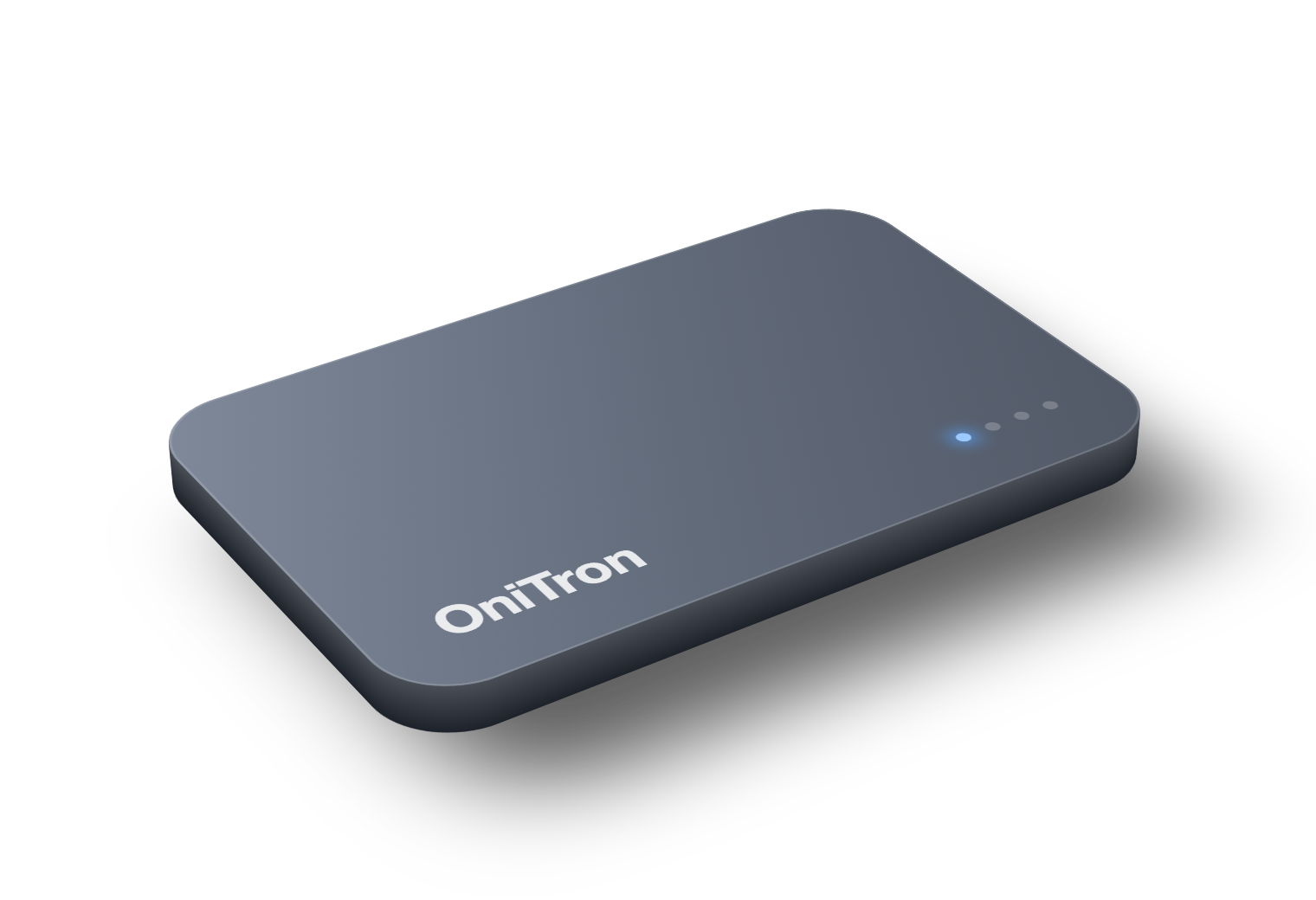 Shape study
Shape study, not the final design. The final render and photos of the prototype are coming.
Why OniTron
No PC
The web app is served by OniTron itself over its own Wi-Fi. Nothing to install, no drivers, no laptop on the bench.
1.8–5 V
OniTron detects the target voltage on its own and shifts its lines to match, from 1.8 V to 5 V.
Protected
ESD-protected connector, protected GPIO, and target power with a current limit and short-circuit protection.
Open
Read and change the firmware, drive OniTron from your own scripts, and add functions with stackable modules it recognises on its own.
Measured limits (currents, speeds, supported phones) are published before launch.
Before the campaign
Leave your email and we'll write when the OniTron campaign opens on Kickstarter, with the link and the exact time.
Launch date coming soon. Subscribers hear it first.
We're live on Kickstarter. Back OniTron →
Signing up is free and isn't a pre-order: it doesn't reserve a device and nothing is charged. You back the project on Kickstarter once the campaign is live.
Almost there
We've sent a confirmation to . Click the link inside and you're on the list. Can't find it? Check spam or promotions.
How it works
What you get to work with
We publish measured limits after we've tested them on the board, not before.
Functions
The functions OniTron is built around. Each one is driven from the web app or from your own scripts.
Works on its own with your phone. No PC, no drivers.
To any 1.8–5 V target, with automatic voltage detection.
Scanner and bus tool with level translation.
Level-shifted. Direction set pin by pin.
Protected target connector.
Target voltage detected automatically.
Wired link to a computer, when you want one.
3.3 V or 5 V, current-limited and short-circuit protected.
Its own access point. No router needed.
Wi-Fi built in.
Control devices from your own scripts and tools.
Reader and tag emulator.
Stackable expansion header. Modules are recognised automatically. First module: emulator board.
Read it, change it, build on it.
Slim as a power bank.
Values shown in the illustrations are examples. Measured limits are published before launch.
Built for
A board that won't start: power it at 3.3 V or 5 V with a current limit, read what it prints on its serial port, check which chips answer on the I²C bus.
No laptop to carry. OniTron and your phone are enough to read a console or check a bus right where the machine is installed.
First power-on of a new design: protected, level-shifted lines from 1.8 V to 5 V, GPIO you set pin by pin, and an API for your own scripts.
Write the checks once as a script over the API, then repeat them on every unit.
The web app
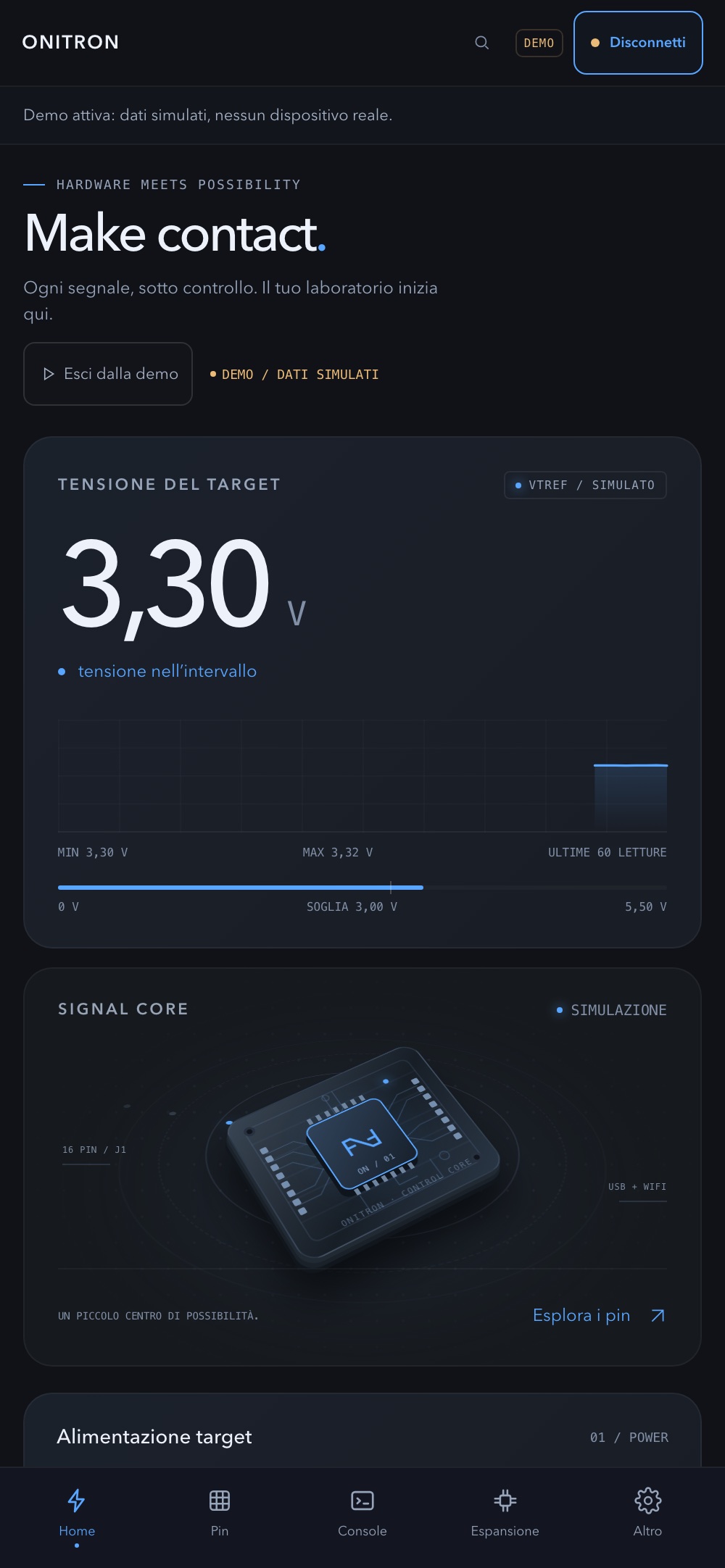
The web app lives inside OniTron and opens in your browser. These screens come from the current development build in demo mode, with simulated data. The interface is in Italian today.
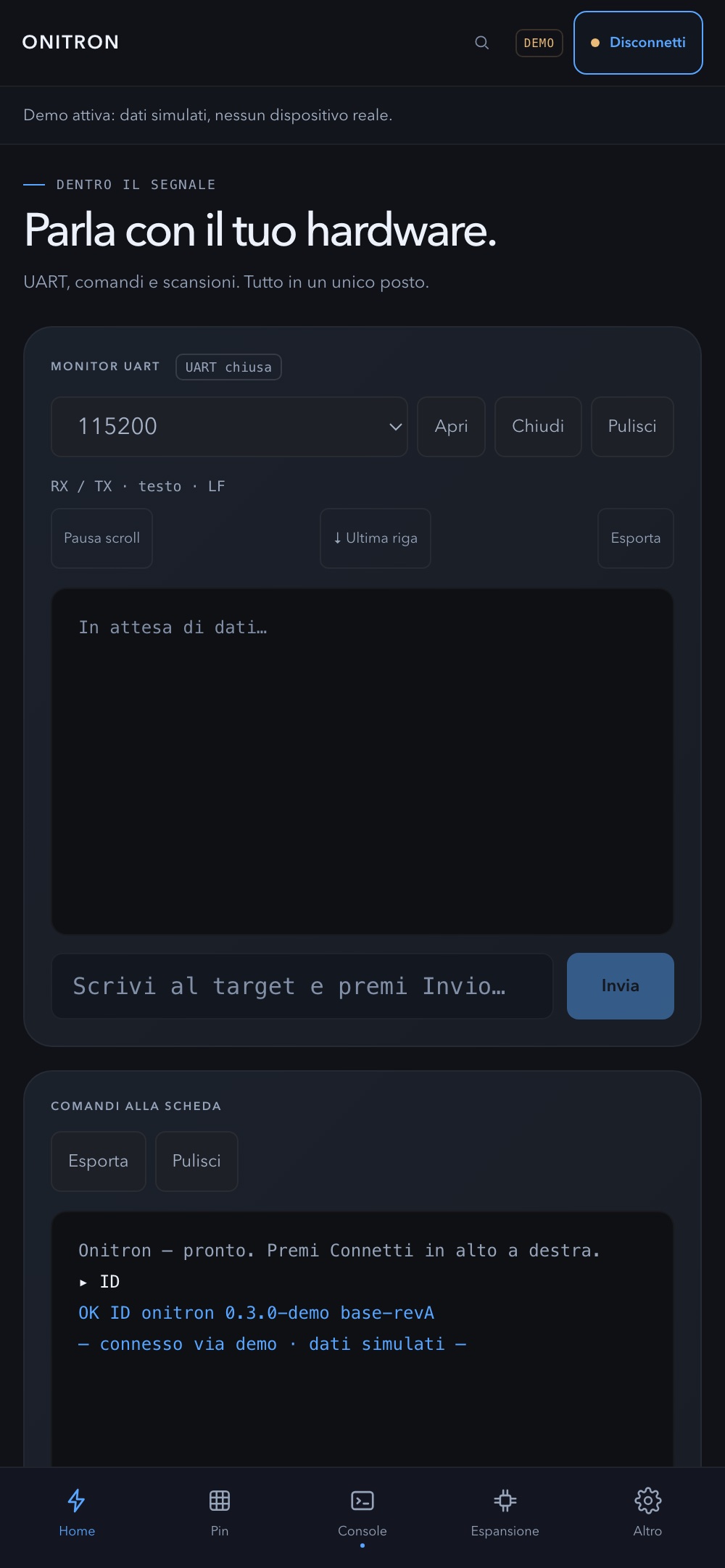
Designed for the browser of phones, tablets and computers. Tested combinations are published before launch.
Built in the open
We'd rather show the unfinished parts than polish them away. This board changes as the prototype does.
Works
In test
Next
Questions
No. It's a free email reminder. It doesn't reserve a device and nothing is charged. You back the project, and pick a reward, on Kickstarter once the campaign opens.
No. OniTron serves its own web app over its own Wi-Fi: you open it in your phone's browser. There's nothing to install and no drivers.
Targets from 1.8 V to 5 V. OniTron detects the target voltage and shifts its lines to match. The target connector is ESD-protected.
Yes, at 3.3 V or 5 V, with current limiting and short-circuit protection. We'll publish the measured limits before launch.
Three: OniTron Slim, OniTron Ultra and one in between. Depending on the model, OniTron has a built-in battery or takes its power straight from the target. We'll publish what each model includes, and its price, before launch.
Yes. You can read it, change it and build on it, and you can control OniTron from your own scripts through its API.
We'll set prices, rewards and the delivery estimate before launch. We won't name a date we can't back up.
ONIT, based in Roccella Ionica, Italy. We design OniTron's electronics, firmware, enclosure and web app.
An email when the campaign opens, plus the occasional build update.
Notify me at launch